
Restorative care · Gilbert / Queen Creek
Dental Bridges in Queen Creek, AZ
Replace missing teeth and restore the appearance and function of your smile with dental bridges in Queen Creek, AZ. A dental bridge uses one or more artificial teeth to fill the space left by missing teeth and can help you chew and smile with greater confidence. Marketplace Dental Excellence can evaluate your teeth and discuss whether a dental bridge is a suitable option for replacing missing teeth.
What Are Dental Bridges?
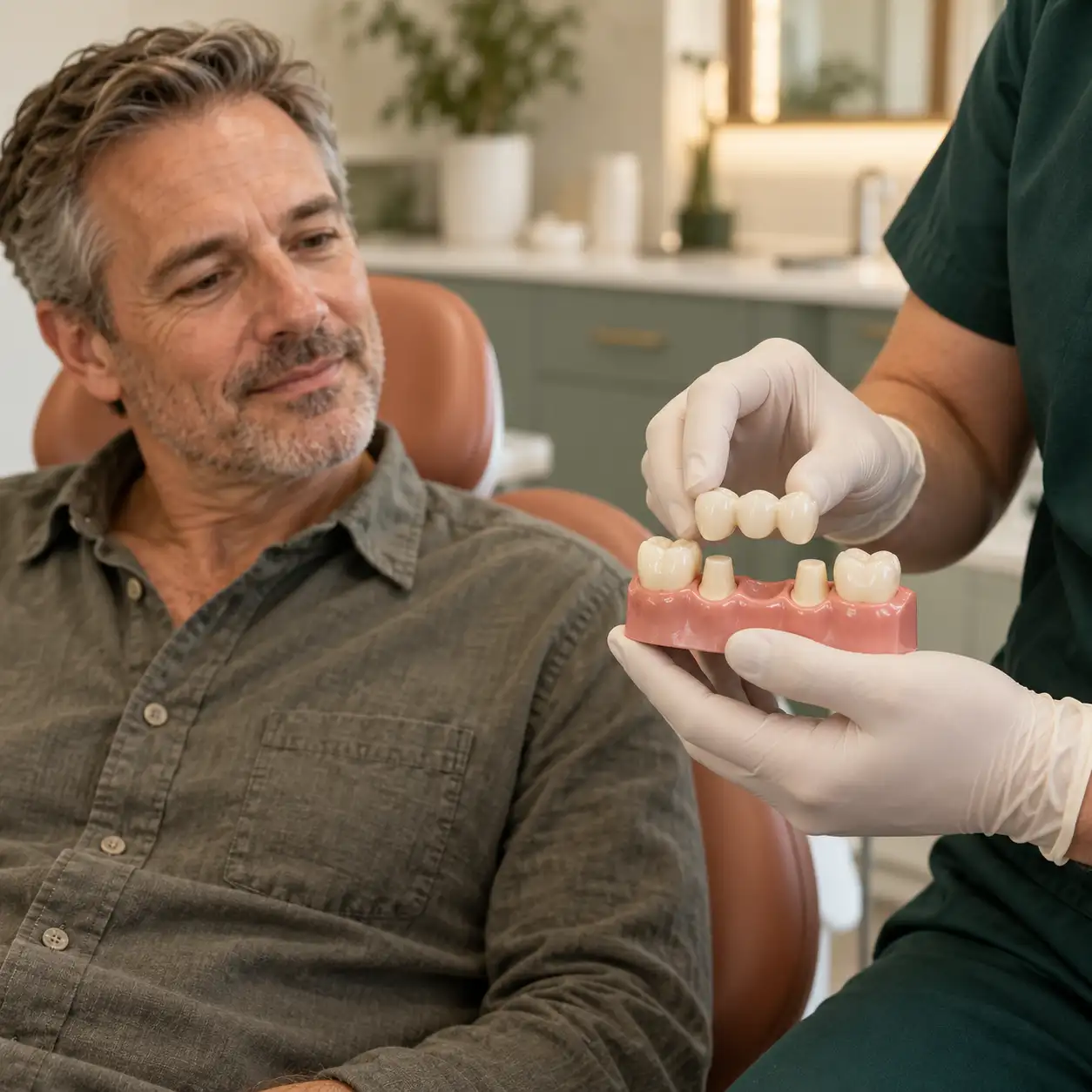
A dental bridge is a dental restoration that replaces one or more missing teeth by filling the gap between the remaining teeth. The replacement tooth, called a pontic, sits in the space where the missing tooth was and helps restore the appearance and function of your smile.
A bridge can be supported by natural teeth next to the gap or by dental implants, depending on your oral health and treatment needs. Our dentist can evaluate the area and explain which type of dental bridge may be appropriate for you.
What Our Patients Say


 Trustindex verifies that the original source of the review is Google.
 Trustindex verifies that the original source of the review is Google.
 Trustindex verifies that the original source of the review is Google.
 Trustindex verifies that the original source of the review is Google.
 Trustindex verifies that the original source of the review is Google.
 Trustindex verifies that the original source of the review is Google.
 Trustindex verifies that the original source of the review is Google.
 Trustindex verifies that the original source of the review is Google.
When Do You Need a Dental Bridge?
A dental bridge may be an option if you have one or more missing teeth and want to restore the appearance and function of your smile. Replacing missing teeth can also help fill a gap that makes chewing or speaking more difficult.
A bridge may be considered when the teeth next to the gap are healthy and suitable to support the restoration. However, not every missing tooth can be treated with a bridge. Our dentist will evaluate your teeth, gums, and overall oral health to determine whether a dental bridge is appropriate for you.
Types of Dental Bridges
Dental bridges differ mainly in how they are supported and where they can be used. The right type depends on the location of the missing tooth or teeth and the condition of the surrounding teeth or implants.
Traditional Dental Bridges
Traditional bridges are supported by dental crowns placed on the natural teeth next to the gap. They are commonly considered when healthy supporting teeth are available on both sides of the missing tooth or teeth.
Cantilever Dental Bridges
Cantilever bridges are supported by a crown attached to a nearby natural tooth on one side of the gap. They may be considered when there is only one suitable supporting tooth, depending on the location and amount of pressure the bridge will receive.
Maryland Dental Bridges
Maryland bridges use a replacement tooth with a framework that attaches to the back of nearby teeth rather than requiring full crowns. They may be considered for certain missing teeth when the surrounding teeth provide suitable support.
Implant-Supported Dental Bridges
Implant-supported bridges are secured to dental implants rather than natural teeth. They may be considered when multiple adjacent teeth are missing and dental implants can provide the necessary support.
Benefits of Dental Bridges
Dental bridges can do more than fill the visible space left by missing teeth. Depending on your needs, they may help:
- Replace missing teeth: Fill the gap with one or more artificial teeth.
- Restore chewing function: Make it easier to chew by replacing missing teeth.
- Support clearer speech: Help restore normal speech when missing teeth have affected the way you pronounce certain sounds.
- Improve your smile: Fill visible gaps and create a more complete-looking smile.
- Keep neighboring teeth from shifting: A bridge can help maintain the space by replacing the missing tooth or teeth.
Dental Bridges vs. Dental Implants
Both dental bridges and dental implants can replace missing teeth, but they work differently. A bridge uses natural teeth or implants for support, while an implant is placed into the jawbone to support a replacement tooth or restoration.
Feature
Dental Bridges
Dental Implants
Replaces missing teeth
Dental Bridges
Yes
Dental Implants
Yes
Uses neighboring natural teeth
Dental Bridges
Often
Dental Implants
No
Replaces the tooth root
Dental Bridges
No
Dental Implants
Yes
Surgical placement
Dental Bridges
Usually no implant surgery
Dental Implants
Requires implant surgery
Treatment timeline
Dental Bridges
Generally shorter
Dental Implants
Usually longer
May be considered when
Dental Bridges
Supporting teeth are suitable for a bridge
Dental Implants
Bone and overall oral health are suitable for implants
What to Expect When Getting a Dental Bridge
Getting a dental bridge involves evaluating the teeth around the missing tooth or teeth, preparing the supporting teeth when needed, creating the bridge, and placing the final restoration. Our dentist will determine the specific steps based on the type of bridge and your oral health.
01
Dental Examination
Our dentist will examine your teeth, gums, and the area where teeth are missing to determine whether a dental bridge is a suitable option. The health and strength of the teeth that will support the bridge are important factors when planning treatment. Our dentist may also use dental X-rays or other imaging when needed to evaluate the teeth and surrounding structures.
02
Preparing the Supporting Teeth
For a traditional bridge, the teeth next to the gap serve as support for the restoration. These teeth may need to be reshaped so the crowns that hold the bridge in place can fit properly. The amount of preparation depends on your specific treatment plan and the type of bridge being used.
03
Creating Your Bridge
After the supporting teeth are prepared, our dentist takes impressions or other measurements of your teeth. These details are used to create a bridge that fits the space and works with your existing teeth. A temporary restoration may be placed while the final bridge is being made.
04
Fitting and Placing the Final Bridge
Once the final bridge is ready, our dentist will place it over or attach it to the supporting structures and check how it fits. The bridge is then secured in place once the fit is confirmed.
05
Checking Your Bite and Comfort
Our dentist will check how your teeth come together with the new bridge in place and make any necessary adjustments. The goal is for the restoration to fit comfortably and function properly when you bite and chew.
How to Care for Your Dental Bridge
Good daily care can help keep your dental bridge and the surrounding teeth and gums healthy. Follow your dentist's instructions and:
- Brush twice a day: Use a soft-bristled toothbrush and fluoride toothpaste to clean your teeth and bridge.
- Clean around and underneath the bridge: Food and plaque can collect around the restoration, so clean these areas carefully.
- Floss or use an appropriate interdental cleaner: Your dentist can show you the best way to clean beneath the bridge and between the supporting teeth.
- Maintain regular dental visits: Routine dental appointments allow your dentist to check the bridge and the surrounding teeth and gums.
- Avoid habits that can damage the bridge: Do not use your teeth to open packages or regularly bite hard objects, as this can damage the restoration.
How Long Do Dental Bridges Last?
The lifespan of a dental bridge varies from person to person. With proper care, a bridge can provide long-term tooth replacement, but its durability depends on several factors.
Oral hygiene, the health of the supporting teeth and gums, your bite, the type of bridge, and regular dental care can all affect how long a bridge lasts. Brushing, cleaning around and underneath the bridge, and attending regular dental visits can help protect the restoration and the teeth that support it.
Are Dental Bridges Right for You?
A dental bridge may be an option if you have one or more missing teeth and have suitable teeth or implants to support the restoration. Our dentist will consider several factors, including:
- Number and location of missing teeth
- Health of the neighboring teeth
- Gum health
- Overall oral health
- Your tooth-replacement goals
A dental bridge is not the right option for every patient. Depending on your individual situation, dental implants or another tooth-replacement option may be considered. Our dentist can evaluate your smile and discuss the options that fit your needs.
Why Choose Marketplace Dental Excellence for Dental Bridges?
Marketplace Dental Excellence in Queen Creek, AZ, offers dental bridges to replace missing teeth, along with dental implants and dentures as other tooth-replacement options. Having these options available allows you to discuss how a bridge may fit your situation based on the number of missing teeth, the condition of the surrounding teeth, and your overall treatment needs.
Our dentist can evaluate the teeth around the missing space and explain whether a dental bridge may be suitable for you. If another tooth-replacement option is more appropriate, you can also discuss dental implants or dentures and choose a treatment approach that fits your dental needs and goals.
Ready to Replace Your Missing Teeth?
If you are missing one or more teeth, a dental bridge may help restore your smile and chewing function. Schedule a dental bridge consultation with Marketplace Dental Excellence to discuss your tooth-replacement options.
Frequently Asked Questions
How much does a dental bridge cost?
The cost of a dental bridge varies depending on the type of bridge, the number of teeth being replaced, and the condition of your teeth and gums. A dental evaluation is needed to determine your treatment needs and provide an accurate cost.
How long does a dental bridge last?
The lifespan of a dental bridge varies based on factors such as oral hygiene, the health of the supporting teeth and gums, your bite, the type of bridge, and regular dental care. Proper daily care and routine dental visits can help protect the bridge and supporting teeth.
Is getting a dental bridge painful?
The process may involve some sensitivity or discomfort, particularly when the supporting teeth are being prepared. Your dentist will explain what to expect and take appropriate steps to keep you comfortable during treatment.
Can a dental bridge replace more than one missing tooth?
Yes. Some dental bridges can replace multiple adjacent missing teeth. The appropriate type of bridge depends on the location and number of missing teeth and the condition of the teeth or implants that will support it.
How do I care for a dental bridge?
Brush your teeth twice a day and clean carefully around and underneath the bridge. Floss or use an appropriate interdental cleaner to remove food and plaque from areas that are difficult to reach. Regular dental visits can also help monitor the bridge and supporting teeth.
Can I get a dental bridge if I have gum disease?
It depends on the condition of your gums and overall oral health. Active gum disease may need to be addressed before a bridge is placed because healthy supporting tissues are important for the success of the restoration. Our dentist can evaluate your gums and teeth and discuss your treatment options.
More ways we can help
Related restorative services.
Neighborhoods
We proudly serve patients from these surrounding neighborhoods and communities
Queen Creek
Gilbert
Mesa / Gateway
Driving Directions
Marketplace Dental Excellence is conveniently located at 18610 S Rittenhouse Rd #106 in Queen Creek, AZ 85142, making it easily accessible from major roads throughout the East Valley. If you’re traveling from Phoenix or areas to the west, US-60 East and Loop 202 East provide convenient routes toward Queen Creek. From the north, Loop 202 South connects to local roads leading directly to Rittenhouse Road. Visitors coming from the south can use Hunt Highway or local roads to reach the dental office quickly. Our location is close to neighboring communities like Gilbert, Chandler, San Tan Valley, and Mesa, with ample parking available. Be sure to plan for potential traffic during peak hours to ensure a smooth visit.