Most people feel much better about one week after wisdom teeth removal. The gums and bone under them take longer to heal, often a few weeks or more. If you have surgery coming up, it is normal to wonder how the next few days will feel.
At Marketplace Dental Excellence in Queen Creek, AZ, patients ask us this all the time. Knowing what to expect can make the whole thing feel a lot less scary. Everyone heals a little differently. Your teeth, your health, and how you care for your mouth all play a part. This guide walks you through each stage so you know what is normal and when to ask for help.
How Long Does Wisdom Teeth Recovery Take?
For many people, the hardest part is over in 3 to 5 days, and life feels close to normal after one to two weeks. Full healing under the gums takes longer.
A study by White and colleagues (2003) followed 630 people who had all four wisdom teeth removed. Most parts of their recovery, like eating, talking, and daily routine, were back to normal within about five days. Pain took the longest to fade, and about 22 percent of the patients needed extra treatment because healing was slow.
So feeling better and being fully healed are two different things. You may feel fine in a week while the sockets are still closed. That is why it pays to stay gentle with your mouth for a few weeks.
What Happens in Your Mouth After Wisdom Teeth Removal?
Your body fills the empty socket with a blood clot, then grows new gum, then slowly rebuilds bone. Each step moves at its own speed.
The Blood Clot
A blood clot forms in the socket within hours. It works like a natural bandage that protects the bone and nerves underneath. Keeping this clot in place is the most important job in the first few days.
New Gum Tissue
Within a few days, soft pink tissue starts to grow over the clot. By about two weeks the hole looks much smaller, and the gum usually closes over in the weeks after that.
Bone Healing
The bone under the gum keeps rebuilding for months. You cannot feel this part and it does not hurt, but it is one reason your dentist may still want to look at the area after you feel normal again.
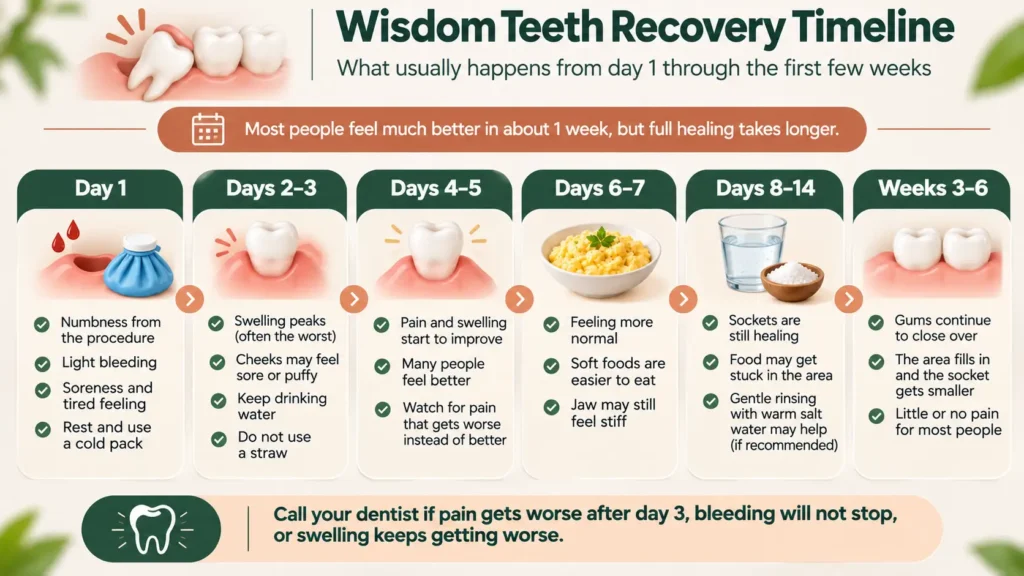
Wisdom Teeth Recovery Timeline Day by Day
Pain and swelling are usually highest in the first two days, then ease a little each day. Here is how a typical recovery goes.
Conrad and colleagues (1999) asked patients to rate their recovery every day for two weeks. On day one, about 64 percent said their worst pain was severe. By day seven, that dropped to 15 percent. Chewing was hard for 85 percent of patients on day one, but only 19 percent by day six. Swelling was the worst on the first two days, and only about 10 percent still had it by day five. Age did not predict a slower recovery, but surgery that lasted 30 minutes or longer did.
Day 1: Surgery Day
Expect numbness, a little bleeding, and a tired, sore feeling. Bite on the clean cotton as your surgeon says, rest with your head up, and hold a cold pack on your cheek. Take your pain medicine before the numbness wears off so the pain does not catch you off guard. If you had sedation, you will feel sleepy for hours, so someone should drive you home. Many patients choose sedation dentistry to stay calm during the visit.
Days 2 and 3: Swelling and Soreness
Your cheeks may look puffy and feel sore, and that is normal. Swelling is often at its worst here, then starts to go down. Some people get bruises on the cheek or jaw that turn yellow or green. Many surgeons suggest cold packs for the first day or two and warm, damp cloths after that to ease stiffness. Drink lots of water and do not use a straw.
Days 4 and 5: Turning the Corner
Swelling keeps going down and pain gets lighter. Many people start to feel like themselves. This is also when dry socket can show up, so watch for pain that gets worse instead of better.
Days 6 and 7: Feeling More Normal
Most people can eat soft foods like eggs and pasta without trouble. Your jaw may feel a bit stiff, and you will see a small hole where the tooth was. Both are normal. Many people feel ready for a full day by now.
Days 8 to 14: Cleaning Out the Holes
Food can get stuck in the sockets during the second week, and that is common. Rinse gently with warm salt water after meals if your surgeon says it is okay. Some surgeons give you a small curved syringe to flush the holes, but only use it when you are told to. Do not poke the sockets with your tongue, fingers, or a toothpick.
Weeks 3 to 6: Gums Close Over
The sockets fill in with new gum and the dents slowly shrink. You should have little or no pain by now. A routine dental exam is a good way to check that everything healed well. If you still have pain, swelling, or a bad taste, do not wait for your next visit.
What Changes How Long Recovery Takes?
The number of teeth, how deep they sit, and how you care for your mouth change recovery the most. Here are the main things that matter.
Impacted vs. Erupted Teeth
Teeth that have fully come in are usually easier to remove, so healing is often quicker. Impacted teeth are stuck under the gum or in the bone. Your surgeon may need to cut the gum or take out a little bone, which can mean more swelling and a longer recovery.
Upper vs. Lower Teeth
Lower wisdom teeth often take longer to heal than upper ones. Lower teeth sit in denser bone and can be harder to reach. Upper teeth are usually easier to remove, but they sit close to the sinuses, so you may feel some sinus pressure for a few days.
Number of Teeth Removed
One tooth is a smaller job than four. More sockets means more swelling and soreness, so plan extra rest if you have all four out at once.
Smoking and Vaping
Smoking and vaping slow healing and raise the chance of dry socket. Nicotine narrows blood vessels, and the sucking motion can pull the clot loose. Avoid both for as long as your surgeon says, and longer if you can.
Health and Aftercare
Health problems like diabetes can slow healing, so tell your dentist about your health and any medicines you take. Following your aftercare sheet closely is the best way to heal on time.
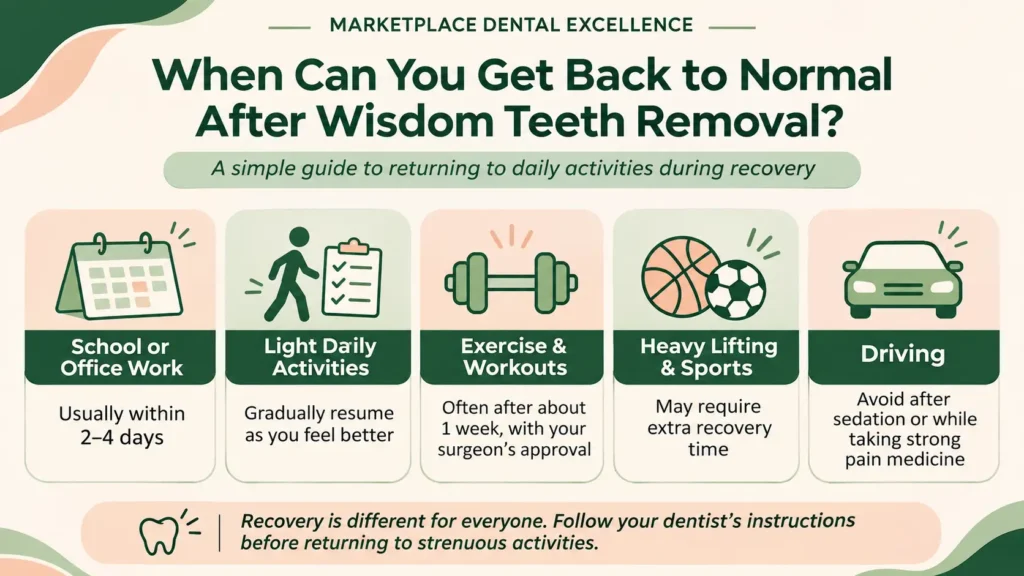
When Can I Go Back to Normal Life?
Most people return to school or a desk job in 2 to 4 days and to hard exercise after about a week, but your surgeon has the final say. Jobs with heavy lifting may need more time off. Hard workouts raise your blood pressure and can start bleeding or throbbing, so wait until you get the okay. Contact sports need an even longer break, so ask before you play. Do not drive after sedation or while taking strong pain medicine. Skip straws and smoking for at least the first week, and skip alcohol while you take pain medicine.
How Can I Tell Normal Healing From Dry Socket?
Normal healing gets a little better each day, while dry socket usually gets worse around day three or four. Dry socket happens when the blood clot comes loose too early and leaves the bone and nerves open. The pain is deep and throbbing, may spread to your ear or the side of your face, and may not ease with your pain medicine. You might also notice a bad taste or smell, and the socket may look empty.
White or yellow in the socket worries many people, but it is often healing tissue or a bit of food. If you are not sure, have your dentist look. Dry sockets are very painful, but a dentist can usually give relief quickly.
When Should I Call a Dentist?
Call right away if you have bleeding that will not stop, a fever, or pain that gets worse after day three. Do not wait for the pain to become severe.
Also watch for swelling that grows after the third day, pus, a very bad taste, or numbness in your lip, chin, or tongue that does not go away. Trouble breathing or swallowing is an emergency, so call 911 or go to the nearest ER. For other problems after surgery, call us at (480) 545-8700 and ask about emergency dentistry appointments. Our hours are Monday to Thursday, 7 AM to 4 PM, and Friday, 7 AM to 1 PM. If it is after hours, follow the instructions your surgeon gave you.
What Should I Eat After Wisdom Teeth Removal?
Eat cool, soft foods for the first day or two, such as yogurt, applesauce, mashed potatoes, and pudding. Let hot soup cool first, because heat can cause more bleeding early on. Eat smoothies with a spoon, never a straw. After a few days, add eggs, pasta, oatmeal, and soft fish. Skip chips, nuts, popcorn, and spicy foods until the area heals, since small bits can get stuck in the sockets. Drink plenty of water the whole time.
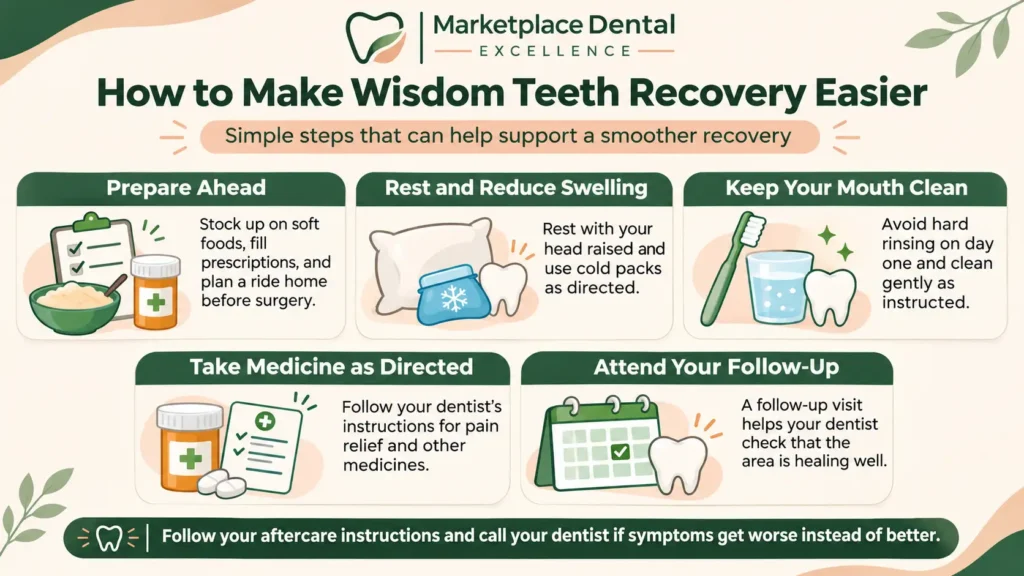
How Can I Make Recovery Easier?
Plan ahead, rest, keep your mouth clean, and follow your surgeon’s instructions. Small steps add up. The tips below are easy to follow and can help you heal with less pain.
Get Ready Before Surgery
Stock up on soft foods and fill your prescriptions ahead of time. Set up extra pillows, and ask someone to drive you home and stay with you the first night. If you can, take a few days off.
Rest and Control Swelling
Sleep with your head raised for the first couple of nights. Two or three pillows work well. Use cold packs as told, about 15 minutes at a time. Skip hard activity and heavy lifting, since they can make your face throb.
Keep Your Mouth Clean
Do not rinse hard or spit on the first day. After that, gentle warm salt water rinses are usually fine. Keep brushing your other teeth, and clean near the sockets gently once your surgeon says it is okay.
Take Medicine as Directed
Take pain medicine and any antibiotics exactly as written. Many surgeons suggest ibuprofen, sometimes with acetaminophen, so ask what is right for you. Do not wait until the pain is strong.
Go to Your Follow-Up Visit
A short check lets your surgeon see that the sockets are healing well. Any stitches that did not dissolve can be taken out at the same visit. Tell your surgeon about any pain, swelling, or bad taste you still have.
Conclusion
So, how long is the wisdom teeth removal recovery timeline? Most people feel much better in about a week, the gums close over in a few weeks, and the bone keeps healing for months.
The best things you can do are rest, eat soft foods, keep the area clean, and skip smoking and straws. Pay attention to pain that gets worse instead of better, because that is the sign to call.
Schedule a Wisdom Teeth Consultation
If your wisdom teeth are causing pain, or your dentist has told you they should come out, Marketplace Dental Excellence in Queen Creek, AZ can take a look. We will check your teeth, explain your options, and talk about what recovery may look like for you.
Our team handles wisdom teeth removal for patients across Gilbert and Queen Creek. Call (480) 545-8700 to set up a visit.
Frequently Asked Questions
Can I brush my teeth after wisdom teeth removal?
Yes, you can brush your other teeth the same night. Stay away from the surgery area on the first day, then brush it very gently once your surgeon says it is okay.
Do wisdom teeth stitches need to be removed?
Often they do not, because many stitches dissolve on their own in one to two weeks. Your surgeon will tell you which kind you have.
How long does numbness last after wisdom teeth removal?
Numbness from the medicine usually wears off in a few hours. If your lip, chin, or tongue still feels numb the next day, call your dentist.
Can I use mouthwash after wisdom teeth removal?
It is best to wait at least a day, then use only what your surgeon approves. Many mouthwashes contain alcohol, which can sting the healing area, and warm salt water is usually the safer choice.
How long do bruises last after wisdom teeth removal?
Bruises often fade within one to two weeks. They may turn from purple to green and then yellow as they heal, which is a normal part of the process.
Can I get a dry socket even if I follow every rule?
Yes, it can still happen, though following your aftercare steps lowers the risk. If your pain gets worse after day three, call your dentist.