Teeth whitening usually lasts about 1 to 3 years. Some people see the color fade in a few months, and others keep their bright smile for longer than 3 years. It depends on what you eat and drink, how you take care of your teeth, and what caused the stains in the first place.
If you are thinking about whitening your teeth, you probably want to know if it is worth the time and money. A brighter smile feels great, so it is fair to ask how long that feeling will last. At Marketplace Dental Excellence in Queen Creek, AZ, patients ask us this all the time. This guide uses real studies to give you a clear answer. You will learn what the research says, what makes whitening fade, and what you can do to keep your smile bright for longer.
How Long Does Professional Teeth Whitening Last?
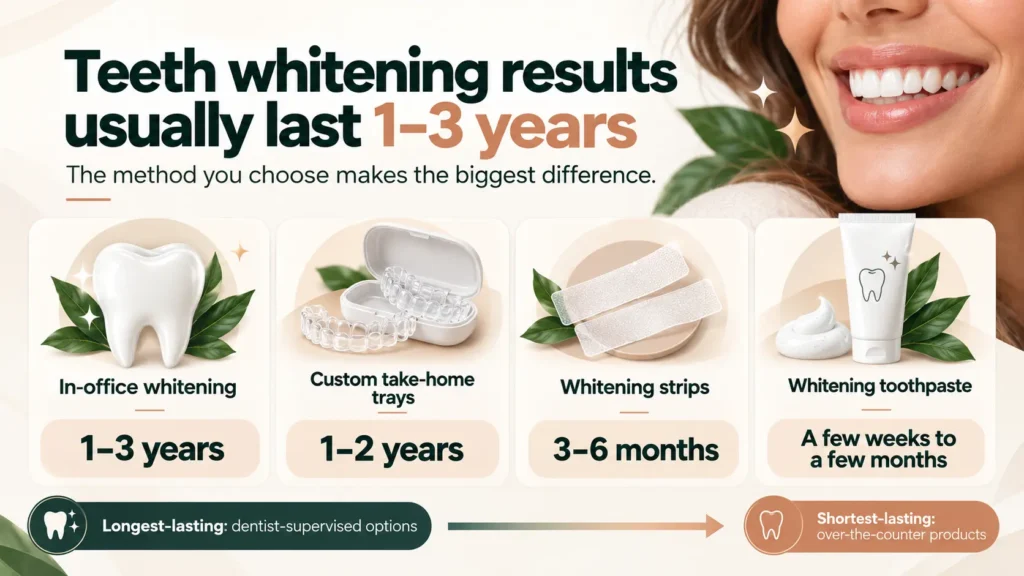
Professional teeth whitening usually lasts between one and three years. Some people need a touch-up sooner, and some go longer. There is no single number that fits everyone, because whitening does not change your teeth forever. It lifts stains and makes the color lighter for a while. After that, your teeth slowly pick up new stains from daily life. Coffee, tea, red wine, and dark sodas all play a part. Think of a white shirt. It looks fresh when it comes out of the wash, but it gets a little dirty again the more you wear it. Your teeth work in a similar way.
Whitening with a dentist gives you better control than store products. The dentist checks your teeth first, picks the right strength, and makes sure the treatment fits your mouth. With professional teeth whitening, the plan is built around your own teeth, so the results are more likely to stay.
Which Whitening Option Lasts Longest?
In-clinic whitening and custom trays from a dentist tend to last the longest, while store products fade the fastest. The table below shows a rough idea of what to expect from each option.
| Whitening Option | How Long Results Usually Last | Best For |
| In-office whitening | About 1 to 3 years | Fast results in one visit |
| Custom take-home trays | About 1 to 2 years | Gradual whitening at home |
| Whitening strips | About 3 to 6 months | Short-term brightening |
| Whitening toothpaste | A few weeks to a few months | Daily upkeep |
These ranges are rough guides and not promises. Your habits, your diet, and the kind of stains you have can move the numbers up or down. Dentist-made options last longer because the gel is matched to your teeth and held in place for the right amount of time. Store products use a lower strength and often work only on the outer layer of the tooth, so you need to repeat them more often. The longer a method lasts, the less often you have to spend time and money on it.
What Does Research Say About How Long Whitening Lasts?
Research shows that whitening results often stay stable for about 1 to 2.5 years. A 2023 systematic review of at-home teeth whitening looked at 24 studies with 1,197 people in total. Most of the studies found that tooth color stayed the same color for 1 to 2.5 years. This was true no matter which whitening product or method the people used. The review was published in Clinical Oral Investigations by Rossella Fioresta and her team.
This is good news, because it means whitening is not a short-lived fix for most people. It also gives you a realistic time frame to plan around. The researchers did point out one problem. The studies measured color in many different ways and followed people for different amounts of time. That makes it hard to give one exact number that works for every person. So when someone tells you an exact number of months, treat it as a rough guide and not a promise.
Does a Stronger Whitening Gel Last Longer?
No, a stronger whitening gel does not make the results last longer. Many people think more power means better and longer results. A 2010 two-year clinical trial of whitening gels tested that idea. The trial was published in the Journal of Dentistry by S.S. Meireles and her team, and it included 92 adults. Half of them used a 10 percent gel, and the other half used a 16 percent gel. Everyone used trays for two hours a day for three weeks.
After two years, 81 of the 92 people came back to be checked. Teeth in both groups were still lighter than they were at the start. The two gels gave the same results, so the stronger one did not last any longer. About two thirds of the people in each group did notice that some color had come back. Most of them described it as mild to moderate.
This matters because stronger gels can cause more tooth sensitivity and gum irritation. If a stronger gel does not give longer results, there is little reason to take that risk. A dentist can help you choose a strength that works well and feels comfortable.
Is Teeth Whitening Painful or Sensitive?
Teeth whitening is not painful for most people, but some feel short-lived sensitivity. It is usually mild and fades within a few days. It often feels like a quick zing when cold air or a hot or cold drink touches your teeth. Some people also feel a light tingle in their gums. People with thin enamel, exposed roots, or small cracks tend to feel it more.
To keep it comfortable, tell your dentist if your teeth are already sensitive. Use a toothpaste made for sensitive teeth, take a day off between sessions, and skip very hot or cold food and drinks for the first couple of days. Sharp pain, pain that lasts more than a few days, or white or swollen gums are not normal. Stop whitening and call your dentist.
What Makes Teeth Whitening Fade Faster?
Dark drinks, tobacco, and plaque buildup make whitening fade faster. Coffee, tea, red wine, and cola are the biggest reasons whitening fades. These drinks have strong colors that stick to the outside of your teeth. Foods like berries, tomato sauce, and soy sauce can do the same thing. Smoking and chewing tobacco leave yellow and brown stains that build up quickly.
Diet is not the whole story, though. Even people who watch what they drink and eat may see their teeth darken a bit over time, because stains build up slowly with everyday life. That is normal. Plaque and hard buildup can also make teeth look dull and yellow, and they hold on to stains. Regular teeth cleaning removes the buildup that brushing at home can miss. It also takes off surface stains, so your smile looks fresher for longer.
Why Do Some Stains Come Back Faster Than Others?
Stains that come from inside the tooth come back faster than stains that sit on the outside. There are two main kinds of stains. Surface stains come from food, drinks, and tobacco. They sit on the outside of the tooth and usually respond well to whitening. Deep stains come from inside the tooth. They can be caused by certain medicines, an injury to the tooth, or aging. These are harder to treat and tend to return sooner.
Stains from tetracycline, a type of antibiotic, are a good example. They tend to lose more of their results over time. That does not mean whitening is pointless for them, but it shows that tougher stains need more care and more touch-ups. If your teeth have deep stains, whitening may only go so far. A dentist can look at your teeth and tell you what to expect. In some cases, other cosmetic dentistry options may give you the look you want with longer-lasting results.
How Can You Make Your Teeth Whitening Last Longer?
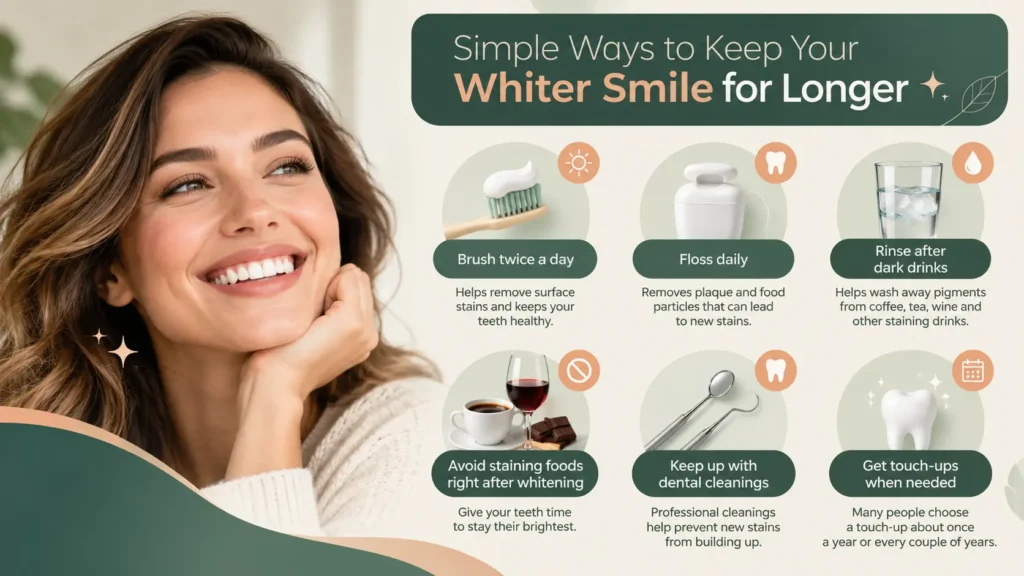
You can make whitening last longer by brushing twice a day, cutting back on dark drinks, and keeping up with your dental visits. Start with the basics. Brush for two minutes in the morning and at night, and floss once a day. This clears away the plaque that grabs stains. If you drink coffee or tea, try using a straw so the drink spends less time on your front teeth. Washing your mouth with water after that helps remove color before it sticks to your teeth.
Be extra careful right after whitening. Your teeth are more open to stains for the first day or two, so stay away from dark drinks and strong-colored foods during that time. If you smoke or use tobacco, quitting is one of the best things you can do for your smile and for your health.
Do not overdo whitening products. Using them too often or for too long can make your teeth sensitive and irritate your gums. The 2023 review warned about this too. More is not better here. Regular dental exams also help. Your dentist can see when your color has started to fade and tell you if it is a good time for a touch-up. Catching it early means a quicker and easier fix.
When Should You Get a Touch-Up?
Most people get a touch-up once a year or every couple of years, when they notice their teeth looking darker. You do not need a set schedule. The best sign is simply your own eyes. If you look at old photos and see that your smile has lost some of its brightness, it may be time. Some people also notice that a favorite shirt or lipstick color no longer looks the way it used to against their teeth.
A touch-up is usually shorter and gentler than the first treatment. Some dentists give you custom trays to keep, so you can do a quick round at home when you need it. This works well because the trays already fit your mouth, and you only use a small amount of gel. Keep in mind that whitening only works on natural teeth. Crowns, fillings, and veneers do not change color. If you have them on your front teeth, the color may look uneven after whitening. Tell your dentist about any dental work before you start, so the plan matches what you have.
Schedule a Teeth Whitening Visit in Queen Creek, AZ
If you want a brighter smile that lasts, the team at Marketplace Dental Excellence in Queen Creek, AZ is ready to help. We will look at your teeth, talk about your goals, and suggest a whitening plan that fits your mouth and your budget. We will also tell you honestly what kind of results to expect and how long they may last. Call us at (480) 545-8700 or contact us online to book your visit.
Conclusion
Teeth whitening usually lasts between one and three years. Strength is not the main factor, so a stronger gel will not buy you extra time. Gentle gels and strong gels can both hold up for years when they are used the right way.
How long your results last comes down to your habits and the type of stain you have. Dark drinks, tobacco, and plaque can make the color fade faster. Good brushing, regular cleanings, and a touch-up when you need one can help you keep your smile bright. A dentist can guide you through each step, so you get a result that looks natural and feels good for as long as possible.
Frequently Asked Questions
Does teeth whitening damage my enamel?
No, teeth whitening does not damage enamel when it is done the right way. Whitening gels work by breaking up the color in stains, not by wearing your teeth down. Problems usually come from using too much product or leaving it on too long, so follow your dentist’s directions.
How many shades lighter can my teeth get?
Many people see their teeth get several shades lighter, and some reach about five shades lighter on a dental shade guide. Your own result depends on your starting color and the kind of stains you have.
Are whitening strips and whitening toothpaste worth using?
They can help with light surface stains, but they do less than a dentist visit. Strips cover only the front teeth and can slip, so the color may come out uneven. Whitening toothpaste mostly cleans the surface and does not change the deeper color of the tooth.
Who should wait before whitening their teeth?
People with untreated cavities or gum disease should wait until those problems are treated. Whitening gel can bother sore gums and reach sensitive spots in a decayed tooth. If you are pregnant or have other health questions, ask your dentist before you start.
Do natural remedies like baking soda or charcoal whiten teeth?
They may scrub off some light surface stains, but they do not change the deeper color of your teeth. Rough scrubbing can also wear down enamel over time. Ask your dentist before you try them at home.